
Easing construction rebalances regional outlook for the Washington DC multifamily market
Q4 2025
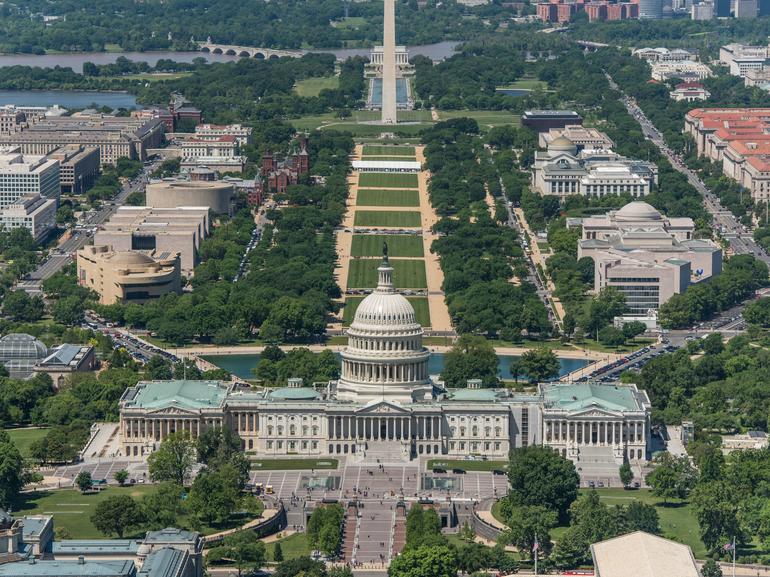
Washington, D.C. multifamily market overview
The Greater Washington D.C., multifamily market softened in the fourth quarter as rents retreated in the second half of the year. Vacancy rates ended 2025 at 5.2%, a 50 basis point increase from one year earlier. This year marked a continuation of elevated supply conditions, with developers delivering 14,300 units in 2025. Since early 2022, approximately 60,000 units have been added to the market, expanding inventory by roughly 15%. This growth has significantly outpaced regional employment, which expanded by only 3.8% during the same period. Current renter demand is being sustained by elevated home prices that make transitioning from renting to owning a significant challenge. Area home prices are up roughly 25% since 2020 and mortgage rates remaining elevated. While white collar job losses remain a headwind for Class A assets, steady hiring in hospitality and construction continues to support the Class C segment.
While developers remained active in bringing new projects online and net absorption trended lower, the investment market maintained a measured pace. Transaction counts in 2025 declined 7% from year-earlier levels, though the year ended with significant momentum as the fourth quarter recorded the highest quarterly sales volume. Some of this activity was fueled by easing interest rates in the second half of the year. Investors primarily targeted newer assets delivered within the past five years, with Class A buildings seeing a 20% increase in transactions over the prior year. In properties that sold in 2025, per-unit prices increased largely due to a shift in activity toward Northern Virginia. Fairfax County saw a notable 33% rise in transactions as fundamentals outperformed the broader region. Fairfax recorded a 130 basis point decrease in vacancy in 2025, one of the most significant improvements of any submarket in Northern Virginia, to end the year at 3.7%.
Looking ahead
Working class renter demand may improve in 2026, though it will likely take a few more quarters for uncertainty to lift and for the outlook to fully normalize. While regional job losses weighed on leasing in 2025, vacancy remained below the long-term average. With workforce reductions mostly confined to white collar and government roles alongside steady hiring in hospitality and construction, Class C properties are positioned for improved performance in 2026. Separately, a handful of areas will benefit from acute supply pullbacks. In the Navy Yard-Capitol Hill submarket, a surge in new supply recently pushed the vacancy rate into the 6% band. As regional construction is expected to retreat in 2026, these high delivery corridors should expect a reprieve that allows fundamentals to stabilize.
The investment outlook for Washington D.C., remains cautious as economic uncertainty impacts transaction sentiment, yet the supply side of the equation offers considerable clarity for 2026. The regional construction pipeline ended 2025 at its lowest level in a decade, with annual deliveries projected to fall below 10,000 units in 2026. This contraction is expected to mitigate oversupply risks and stabilize valuations as the market absorbs the recent wave of product. While federal workforce reductions remain a headwind, emerging regulatory shifts and procedural reforms in the District are expected to influence investment activity. As new starts remain limited, investors may find opportunities in high-delivery corridors like Navy Yard-Capitol Hill, where a pullback in the pipeline should allow fundamentals to stabilize following a period of elevated vacancy.
Learn more about Washington, D.C.'s multifamily market
Contact the Northmarq's Washington, D.C.'s office today!


Insights
Research to help you make knowledgeable investment decisions